
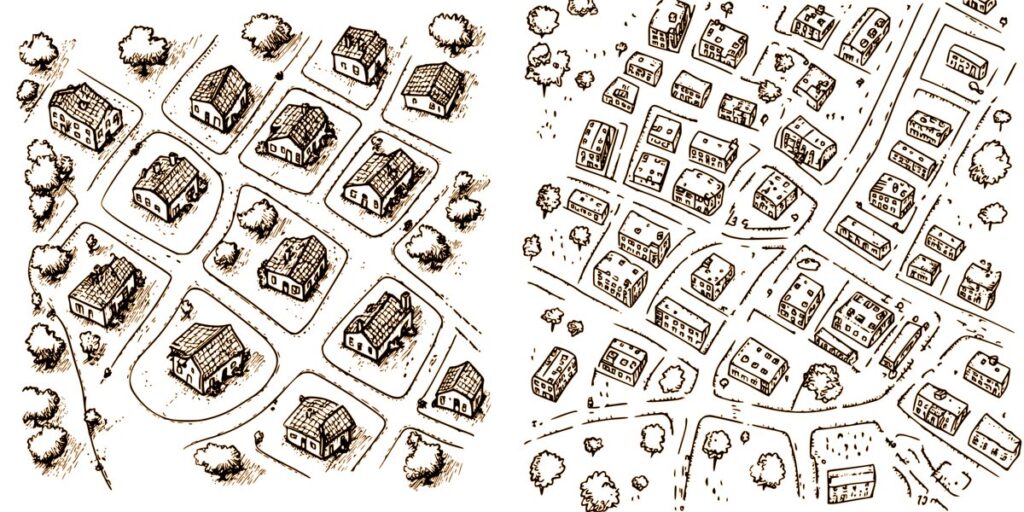
A Neighborhood Beside the Woods
There are New Rochelle neighborhoods that announce themselves with grand entrances, historic houses, or busy commercial corners. Ward Acres Homes is quieter. Its character reveals itself gradually—in the shade of mature trees, the spacious lawns along winding residential streets, and the easy transition from backyard to woodland trail.
Often associated with the broader Bonnie Crest area, Ward Acres Homes lies beside Ward Acres Park in the northern part of New Rochelle’s Wykagyl section. The neighborhood is connected by streets including Broadfield Road, Pinebrook Boulevard, Ward Drive, Hillandale Drive, Tulip Lane, Hayhurst Road, Kenwood Drive, Saxon Way, and Winding Brook Road. Its defining feature is the remarkable green space at its edge: a former estate and horse farm that became one of the city’s most beloved public parks. ([learnsth.icu](https://learnsth.icu/wiki/List_of_New_Rochelle_neighborhoods?utm_source=openai))
For residents, that proximity is more than a pleasant amenity. It is the thread that ties the neighborhood’s modern homes to a much older landscape.
Before the Houses: Farms and Horse Country
Long before Ward Acres Homes was developed, this part of New Rochelle was rural country. The land that now includes Ward Acres Park was once associated with Hillandale Farm, a large horse-breeding estate dating to the 1880s. The property was part of a tradition common in northern Westchester, where wealthy New York families maintained country estates, gardens, orchards, and riding facilities.
The wider area was also connected with Daisy Farms, a working farm and equestrian property associated with Georgina Iselin of Davenport’s Neck. The Hutchinson Riding Academy operated in the vicinity, reinforcing the area’s reputation as a place for horses, open fields, and country pursuits. Even today, the broad meadows, stone walls, mature woods, and remnants of old agricultural buildings at Ward Acres Park offer clues to that earlier landscape. ([learnsth.icu](https://learnsth.icu/wiki/List_of_New_Rochelle_neighborhoods?utm_source=openai))
The former estate’s main house, known as Homewood, no longer survives. But traces of the property remain in the park’s old foundations, stonework, paths, and outbuildings. Near Broadfield Road, a concrete-block structure known locally as “The Forge” is associated with the former New York, Westchester and Boston Railway right-of-way. These surviving fragments give the neighborhood a sense of depth that newer subdivisions rarely possess. ([en.wikipedia.org](https://en.wikipedia.org/wiki/New_York%2C_Westchester_and_Boston_Railway?utm_source=openai))
How Ward Acres Got Its Name
The name “Ward Acres” is connected not simply to the park, but to the Ward family and its history in New Rochelle. A city history prepared for Ward Acres explains that a parcel was donated for the Ward School by a woman who named it in memory of her late husband. The Ward family later relocated to Ridgefield, Connecticut, where they operated a 35-acre horse farm also called Ward Acres Farms. ([newrochelleny.gov](https://www.newrochelleny.gov/DocumentCenter/Home/View/2176?utm_source=openai))
That family connection helped establish “Ward” as a lasting local name. When New Rochelle acquired the remaining parkland in 1962, the city continued the name by creating Ward Acres Park. The adjacent residential development gradually became known as Ward Acres Homes, Ward Acres, or, in some local descriptions, part of Bonnie Crest.
Names in New Rochelle often preserve stories that are no longer obvious on a map. Ward Acres is a good example: one name links a school, a family, a former farm, a public park, and a residential community.
The 1950s Housing Boom
The neighborhood’s present-day appearance took shape during the postwar years. In 1951, the Berne Construction Company of White Plains acquired property in the area and developed more than 300 single-family ranch-style homes on generously sized lots. This was part of a larger suburban transformation across Westchester, as returning veterans, growing families, and commuters sought modern homes within reach of New York City. ([learnsth.icu](https://learnsth.icu/wiki/List_of_New_Rochelle_neighborhoods?utm_source=openai))
The ranch houses of Ward Acres Homes reflected the era’s preferences: practical one-story living, attached or integrated garages, broad windows, private yards, and floor plans designed for family life. Unlike denser sections of New Rochelle, the neighborhood offered space and quiet while remaining connected to the city’s schools, shopping districts, and transportation network.
The homes were not built as isolated country cottages. They formed a cohesive postwar community, with streets laid out for neighborhood life rather than through traffic. Children could walk to school, neighbors could meet on front lawns, and the park provided a natural extension of home.
Ward School and the Life of the Community
George M. Ward Elementary School, commonly known as Ward School, is one of the neighborhood’s most important institutions. Located alongside Ward Acres Park, the school reflects the same community history suggested by the neighborhood’s name. Its location also creates one of Ward Acres’ most distinctive civic landscapes: a public school, a residential neighborhood, and a large natural preserve gathered together in one setting.
Recent improvements have strengthened that connection. The city has highlighted a new crosswalk on Broadfield Road linking Ward Elementary School with Ward Acres Park, making the relationship between school and open space safer and more visible. ([newrochelleny.gov](https://newrochelleny.gov/wardacres?utm_source=openai))
For generations of families, Ward School has been more than a place for classes. It has served as a meeting point, a source of neighborhood identity, and a familiar landmark for children growing up along Broadfield Road, Pinebrook Boulevard, Ward Drive, and the surrounding streets.
Ward Acres Park as a Living Landmark
The city purchased the remaining 62 acres of the former estate in 1962, with substantial assistance from the New York State Park and Recreation Land Acquisition Bond Act. That decision preserved a rare piece of open land at a time when suburban development was accelerating. ([newrochelleny.gov](https://newrochelleny.gov/wardacres?utm_source=openai))
Today, Ward Acres is described as a roughly 68-acre preserve, incorporating woodlands, meadows, walking paths, community gardens, historic ruins, and a popular dog park. The park’s trails pass through landscapes that feel surprisingly rural for a city neighborhood. Stone walls and old field patterns hint at former farm boundaries, while the meadows recall the property’s equestrian past. ([wardacresconservancy.org](https://www.wardacresconservancy.org/?utm_source=openai))
The park has continued to evolve. City planning documents identify areas such as the North Meadow, North Woods, Southeast Woods, Southwest Woods, community gardens, picnic areas, meadow walks, stone walls, and proposed biodiversity spaces. These improvements aim to welcome present-day visitors while protecting the character that makes Ward Acres historically important. ([newrochelleny.gov](https://www.newrochelleny.gov/Archive/ViewFile/Item/1785?utm_source=openai))
A Neighborhood That Keeps Its Past
Over the decades, Ward Acres Homes has changed in familiar suburban ways. Original ranch houses have been renovated, expanded, or replaced. Families have come and gone, landscaping has matured, and the neighborhood has become more diverse in age and background. Yet its basic identity remains remarkably stable.
The same qualities that attracted postwar homeowners still matter today: generous lots, peaceful streets, access to Ward School, and the feeling of having a nature preserve just beyond the sidewalk. A walk from Broadfield Road into Ward Acres Park can still move a person from ordinary neighborhood life into a landscape of woods, meadow, birdsong, and old stone.
That is what makes Ward Acres Homes special. It is not only a collection of mid-century houses, and it is not only the park next door. It is the conversation between the two—the modern community living beside an older countryside, each giving meaning to the other.
For longtime residents, Ward Acres is remembered in many ways: a child’s walk to school, a first home, a winter sledding hill, a dog run, a garden plot, or a familiar trail under the trees. The neighborhood’s heritage lives not in one grand building, but in the everyday experience of generations who have learned to value its open spaces and quiet connections.
A Lasting New Rochelle Identity
Ward Acres Homes tells a distinctly New Rochelle story. Its history includes country estates, horse farms, family names, postwar construction, public education, and determined efforts to preserve green space. The neighborhood has grown without losing the landscape that came before it.
In a city known for its varied neighborhoods, Ward Acres offers a particularly appealing balance: the comfort of a close-knit residential community and the enduring presence of a much older natural world. That balance is its heritage—and the reason Ward Acres continues to feel like home.